Loading...
Serving Santa Rosa, CA and surrounding areas. (707) 867-4232
Cracked, tilted, or crumbling entry steps are a fall risk your family faces every day. We build new concrete steps with proper reinforcement, drainage, and city permits so the problem is solved for decades.
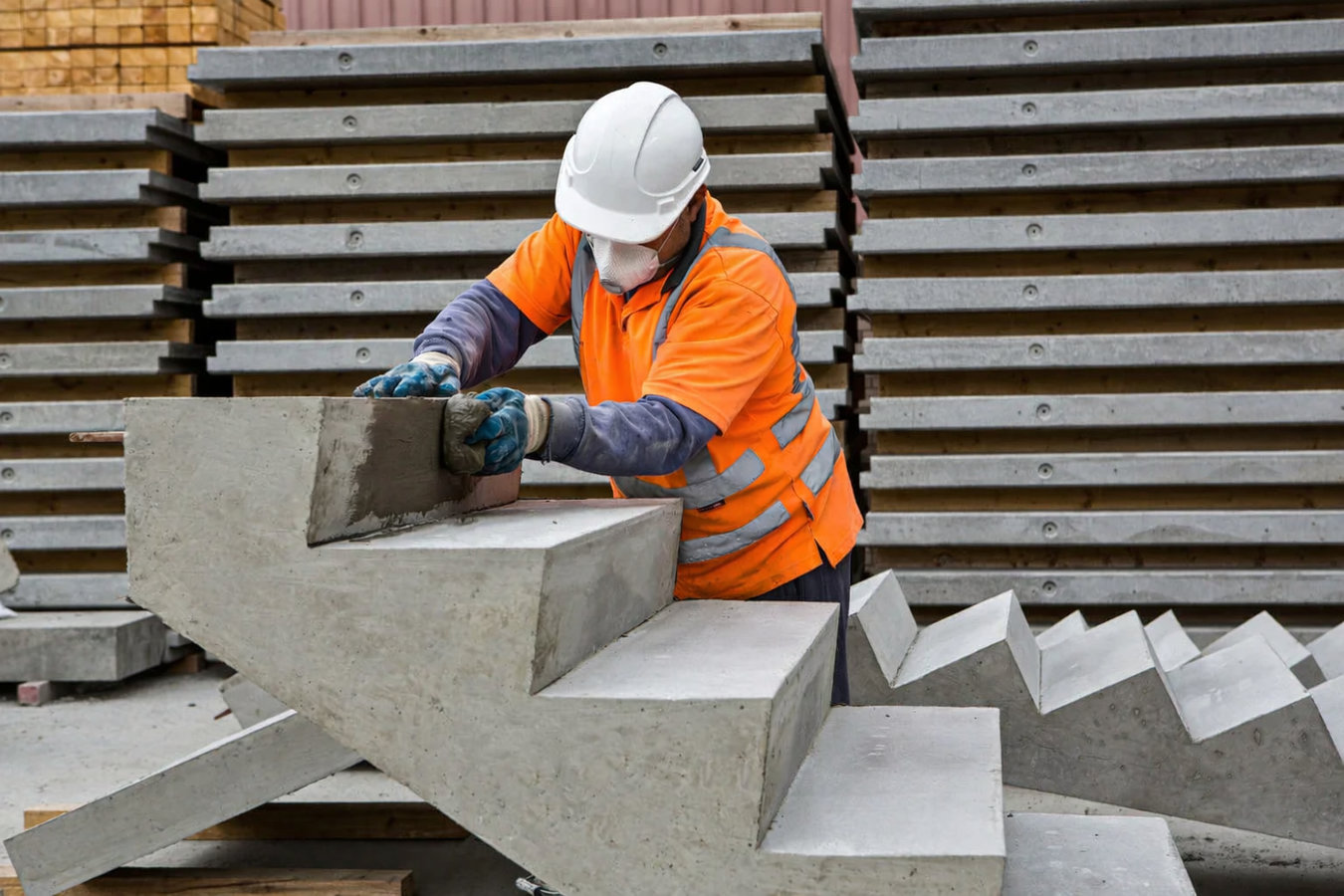
Concrete steps construction in Santa Rosa means removing existing steps if needed, compacting the soil and laying a stable gravel base, setting steel rebar inside the form, pouring the concrete, and finishing each step surface with a slight drainage slope and a textured, slip-resistant finish. Most residential step projects take one to three days of active work, with full curing strength reached at 28 days.
Many homeowners in Santa Rosa contact us about front or side entry steps that have been slowly failing for years. In older neighborhoods like Bennett Valley, Proctor Terrace, and areas around Burbank Gardens, original steps from the 1950s through 1970s were often poured without internal reinforcement on ground that was never properly prepared. Soil movement from the region's clay-heavy ground and decades of wet winters eventually cause tilting and cracking that patching cannot fix.
Homeowners who also need work on the walkway leading to their steps may want to look at our concrete sidewalk building service, which we frequently combine with a steps project in a single visit. If your steps connect to a retaining wall or a raised entry area, our concrete retaining walls page covers how those structures are integrated with step construction.
Cracks wider than a hairline running across one or more steps mean the concrete has started to break down structurally. In Santa Rosa's clay-heavy soils, these cracks often appear after a wet winter when the ground swells and then dries out. Cracks that go all the way through a step mean replacement is the smarter investment over patching.
If any of your steps slope sideways or have shifted out of level, the soil underneath has moved. This is common in older Santa Rosa neighborhoods where original steps were built without deep footings. Tilted steps are a tripping hazard and tend to get progressively worse over time.
The front edge of each step takes the most wear. When concrete chips or crumbles there, the surface has deteriorated past the point of simple repair. The cycle of wet winters and dry summers that Santa Rosa homeowners know well accelerates this breakdown, and once the edges go, the rest of the step usually follows within a few years.
Each step should have a slight forward slope so water runs off the front rather than sitting on the surface. Puddles forming on your steps after a rainstorm mean the drainage slope has worn flat or was never built correctly. Standing water accelerates deterioration and creates a slip hazard during Santa Rosa's wet season.
Every set of steps we build starts with proper ground preparation. We compact the soil and add a gravel base layer sized for the number of steps and the depth of the first riser. Skipping this step is the single most common reason residential concrete steps in Santa Rosa develop cracks and shifts within a few years of installation. We also place steel rebar inside the form before the pour to give each step the internal skeleton it needs to resist cracking under foot traffic and seasonal ground movement.
For finish choices, a plain broom texture is the most practical and cost-effective option. It gives the surface the grip it needs, especially when wet during Santa Rosa's rainy months. Homeowners who want something more distinctive can choose a stamped pattern or an exposed aggregate surface. We frequently build steps as part of a larger project that includes a new walkway from the curb. Our concrete sidewalk building service handles that work, and doing both in a single mobilization saves time and reduces the cost per square foot. For properties where the steps descend from a raised terrace or retaining structure, our concrete retaining walls service covers how those elements are designed and tied together structurally.
We handle the City of Santa Rosa permit process from application through final inspection. For homeowners in unincorporated areas just outside city limits, permits go through Sonoma County, and we handle that process as well.
Most practical and cost-effective. Textured surface grips wet feet, looks clean against any home style.
Small stones revealed on the surface give a natural, high-traction finish that hides surface wear over time.
Patterns that mimic stone or brick for homeowners who want steps that improve curb appeal alongside function.
Santa Rosa is in an active seismic zone and sits on soils that move measurably with the seasons. The Rodgers Creek Fault runs through Sonoma County, and the clay-heavy ground common throughout the city swells during wet winters and contracts in the summer dry season. Steps that are not built with rebar reinforcement and properly compacted subgrade fail faster here than they would in areas with more stable soil. This is not a theoretical risk. It is the most common reason we replace steps in older neighborhoods across the city.
The City of Santa Rosa requires building permits for most exterior concrete step projects attached to a home. Pulling a permit triggers a city inspection that confirms the steps were built safely and to code. That sign-off has direct value when you sell your home. In Santa Rosa, unpermitted structural work is one of the most frequent complications that surfaces during a home sale inspection. Homeowners in Healdsburg and Windsor face similar permitting requirements, and we handle those jurisdictions as well.
Timing is also worth noting. Santa Rosa gets the majority of its annual rainfall between November and March. Fresh concrete cannot be poured in heavy rain without risking a weak or crumbly result. Scheduling step work between April and October gives the pour the best possible curing conditions. If you are thinking about this project, late summer or early fall is the right time to get a contractor on the calendar before the rainy season closes the window. The California Contractors State License Board is the place to verify any contractor's credentials before you sign anything.
We respond within 1 business day to schedule a free on-site estimate. We look at your existing steps, measure the space, and ask about finish preferences. A written quote follows that breaks out labor, demolition, and permit fees separately. No verbal-only pricing.
We apply for the required Santa Rosa building permit before any work begins. You do not need to visit any office. Once approved, we confirm a start date. This step typically adds a few business days to the timeline and is non-negotiable for exterior steps in the city.
On the first work day the crew removes the old steps with demolition saws and jackhammers, then hauls the debris away. They prepare the ground underneath by compacting the soil and adding a gravel base. This is the loudest part of the job and the step most critical to how long the new steps hold up.
Rebar is set inside the form, then concrete is poured, shaped, and textured. Light foot traffic is safe after 24 to 48 hours. The city inspector signs off once the concrete has cured. We remove all debris and walk you through sealing timing before we leave the site.
Free on-site estimate. Written quote that separates labor, demolition, and permits. No surprise charges.
(707) 867-4232Our California C-8 Concrete Contractor license is active and searchable on the CSLB website. Every project carries liability insurance and workers' compensation. California's licensing system is one of the strictest in the country, and ours is current.
We have been building steps throughout Santa Rosa since 2022, in neighborhoods where clay soils are active and wet winters stress concrete. We know which base preparation steps prevent the cracking and tilting that older, under-built steps develop over time.
We pull the City of Santa Rosa permit, coordinate the city inspection, and hand you a job that is fully on record when we are done. You do not wait in any line or manage any paperwork. When you sell your home, there are no surprises.
Every set of steps we build includes steel rebar placed inside the form before the pour. In an active seismic zone with clay soils that move seasonally, internal reinforcement is the difference between steps that last 30 years and steps that crack in five.
Entry steps are one of the most used structural elements on a home, and one of the most frequently underbuilt. Getting them right the first time means proper reinforcement, compacted soil, correct drainage, and a permit that is on record. We have been doing this work in Santa Rosa since 2022 and we pull permits through the City of Santa Rosa Building and Permits Division on every qualifying project.
Connect your new steps to a safe, level walkway from the curb - often scheduled in the same project to reduce mobilization cost.
Learn moreFor properties where steps descend from a raised terrace, retaining walls and steps are designed and built together as an integrated structure.
Learn moreBeat the fall rush. We schedule new and replacement step projects now before Santa Rosa's rainy season closes the window.