
Loading...
Serving Santa Rosa, CA and surrounding areas. (707) 867-4232
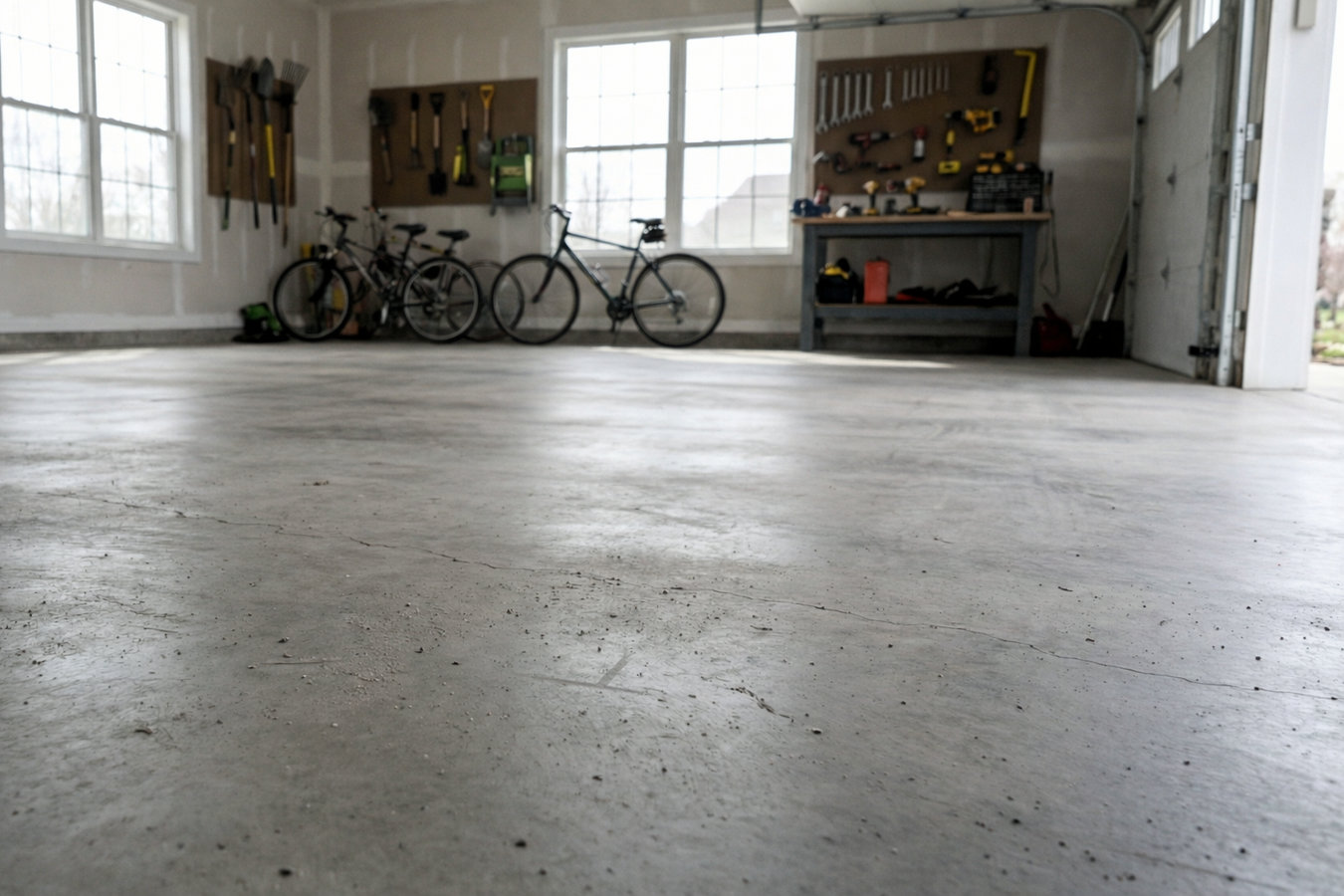
Your garage floor takes more abuse than any other slab on your property. If it is cracking, flaking, or pooling water every winter, a proper replacement solves the problem for decades.
Garage floor concrete in Santa Rosa means removing your old slab or pouring over bare ground, preparing the base beneath, and laying fresh concrete finished to a flat, durable surface - most jobs take one to two days of active work and a week of curing before you can park on it again.
Most homeowners come to us after years of watching hairline cracks grow wider or noticing water collect in low spots after every winter storm. A deteriorating garage floor is not just a cosmetic issue - it signals that the slab underneath is moving, usually because of the expansive clay soils common throughout Sonoma County. The fix is not more patching. It is a properly prepared base and a fresh pour done right.
If you also want to upgrade the look of the space, we can pair a new garage floor with concrete floor installation finishes that make the slab easier to clean and more resistant to oil and moisture.
Small hairline cracks are normal in concrete. But if you notice cracks wider than a pencil tip - or that seem longer every year - the slab is moving. In Santa Rosa, the clay-heavy soil of Sonoma County swells in wet winters and shrinks in dry summers, putting constant stress on the slab from below. Left alone, those cracks let water in and accelerate the damage.
If water collects in low spots on your garage floor after a rainy winter, the slab has settled unevenly. That is a drainage problem as much as a cosmetic one. Standing water in a garage damages stored belongings and can eventually work its way under the slab, softening the base and making the settling worse over time.
When the top layer of a concrete floor starts to flake off in chips or crumble into gritty powder, the surface has deteriorated past the point where cleaning or coating will help. This kind of breakdown is usually caused by years of oil exposure, moisture cycling, or a weak original mix. At that stage, a full replacement is almost always more cost-effective than patching.
Homes rebuilt after the 2017 Tubbs Fire in neighborhoods like Coffey Park varied in construction quality. If your garage floor was poured during a rushed post-fire rebuild and you have never had it assessed, early signs of cracking or unevenness are worth taking seriously before they turn into expensive problems.
Our garage floor work covers the full range of what homeowners in Santa Rosa need. For garages with a deteriorated slab, we break out the old concrete, haul away the debris, and prepare the base properly before pouring anything new. For garages built on bare ground or compacted fill, we grade and compact before laying a vapor barrier and pouring fresh concrete.
We also handle concrete floor installation for homeowners who want a more finished look - whether that means a smooth trowel finish, a textured broom finish, or a surface ready to accept a coating. And if you are also updating the concrete driveway that leads into the garage, we can often combine both projects for a more efficient schedule and a consistent finish throughout.
Every pour includes a properly compacted gravel base, a moisture barrier where needed, and control joints placed to give the slab room to flex without cracking through the finished surface. That base preparation is the work you cannot see, but it is what determines whether your floor lasts 5 years or 40.
Best for garages with a cracked, settled, or deteriorated slab that patching will not fix long-term.
Ideal for garage additions, converted spaces, or lots where concrete was never poured.
Suits homeowners who want a clean, functional floor without added cost for decorative treatments.
For homeowners planning to add an epoxy or polyurea floor coating after the slab cures.
Santa Rosa sits in an active seismic zone with clay-heavy soils that behave unlike what you will find in most parts of the country. The ground expands every winter when the rains arrive and contracts again during the long dry summer. That cycle is the main reason older garage floors in this area develop the wide, shifting cracks that patching cannot fix. A contractor who understands local soil conditions will add a compacted gravel layer beneath the slab specifically to absorb that movement.
The city also gets its rain in concentrated bursts between November and March - which means scheduling matters. Pouring concrete in cold, wet conditions can affect how the slab cures and lead to surface problems months later. We plan our schedule around Santa Rosa's seasonal window, which generally means late spring through early fall for new pours, though a dry stretch in winter can work fine with proper preparation.
We work throughout the area, including in Cotati, Rohnert Park, and Sebastopol, where the same clay-soil and seasonal-moisture conditions apply. Local experience is not a marketing phrase here - it is the difference between a base that holds up and one that does not.
For permit requirements, see the City of Santa Rosa Building Division. For concrete construction standards, the American Concrete Institute publishes guidance on slab preparation and curing.
We will respond within one business day to ask about your garage size, whether you have an existing slab, and what you want to end up with. Most estimates start with a free site visit because the condition of the ground underneath affects the price significantly.
We walk the garage, check for cracks and drainage, and assess the soil conditions. This is also when we confirm whether a City of Santa Rosa permit is required for your project scope - we handle that paperwork on your behalf.
If the old slab is coming out, we break it up and haul it away. Then we grade, compact, and lay the gravel base and moisture barrier before the concrete truck arrives. The pour and finish typically take a few hours for a standard two-car garage.
We walk you through the curing timeline - 24 to 48 hours before foot traffic, seven days before parking - and leave you with written care instructions. If anything does not look right after the floor sets, we come back to address it.
Free estimate, no obligation. We respond within one business day.
(707) 867-4232We hold a current California C-8 Concrete Contractor license, which is the specific classification required for concrete flatwork in this state. That license is how you know the crew on your property has met California's standards - not just showed up with a truck.
We factor Sonoma County's clay soils into every base preparation - that means proper compaction, gravel fill where needed, and control joint placement specific to local movement patterns. This is the work that determines whether your floor lasts a decade or three.
We have pulled permits through the City of Santa Rosa Building Division on every project that required one since we opened in 2022. That track record matters when you go to sell your home and a buyer's inspector asks about your slab.
We have assessed and replaced garage floors in Coffey Park and Fountaingrove - neighborhoods rebuilt after the 2017 Tubbs Fire where slab quality varied. If your home was part of that rebuild, we know what to look for and how to fix it.
Every one of those credentials translates directly to a garage floor that holds up in Santa Rosa's climate without creating liability for you later. We do not cut corners on permits or base prep because those are the two things that come back to bite homeowners - and we have seen it happen too many times on jobs we were called in to fix.
Finished interior and exterior concrete floors with surface options beyond a standard garage broom finish.
Learn moreReplace or extend the driveway that leads into your garage for a consistent, durable surface from street to slab.
Learn moreSanta Rosa's clay soils and wet winters mean timing matters - contact us now to schedule before the dry season fills up.